
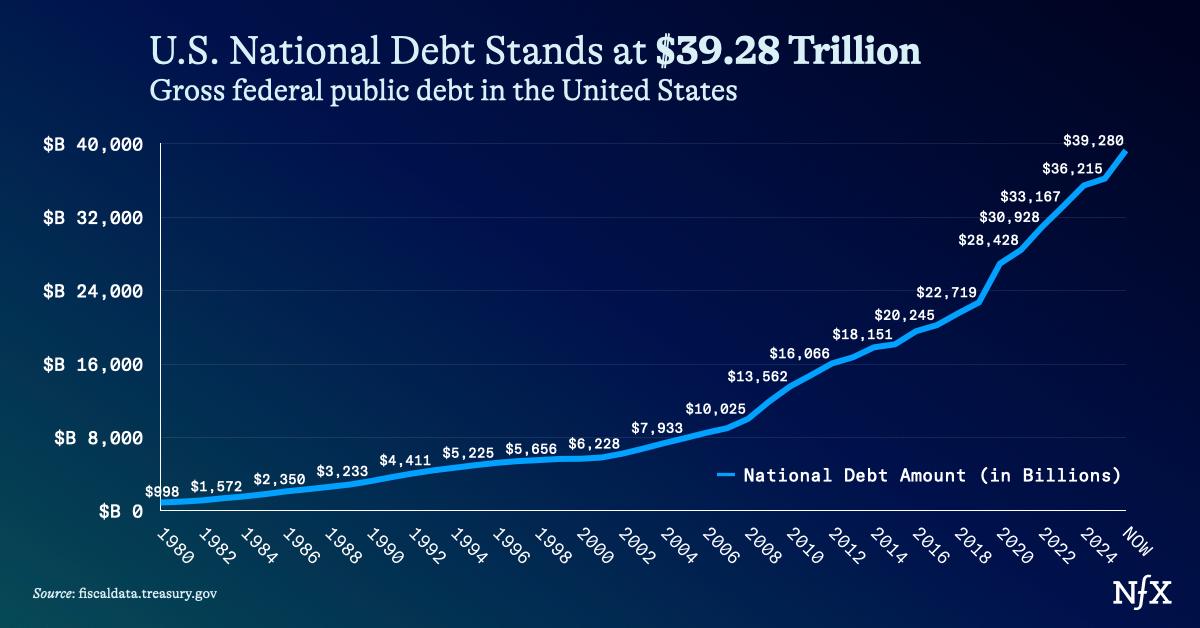
America owes $39 trillion.
Slowing human aging by a single year would generate roughly $38 trillion in value.
Extending life expectancy by 10 years would be worth $367 Trillion.
That’s how big an opportunity longevity is. Enough to fundamentally transform our economy. About 10x the size of our ballooning national debt.
Last year, we laid out the full argument in Longevity Can Save America. This is the streamlined case: the economic logic for helping people live longer, healthier lives, updated with this year’s numbers.
It takes about five minutes, and by the end, you’ll understand an idea that very few people have actually wrapped their heads around.
The Problem:
The national debt stands at about $39.2 trillion as of mid-2026. The annual deficit – the gap between what the US earns and what it spends – is projected at $1.9 trillion this year. That’s large by historical standards: deficits have averaged about 3.8% of GDP over the last 50 years. This year’s runs near 5.8%.
Most of that gap traces back to four exploding line items: Medicare, Medicaid, Social Security, and interest on the debt.
Longevity can solve all four.
How Longevity Reduces Costs
Let’s start with Medicare and Medicaid.
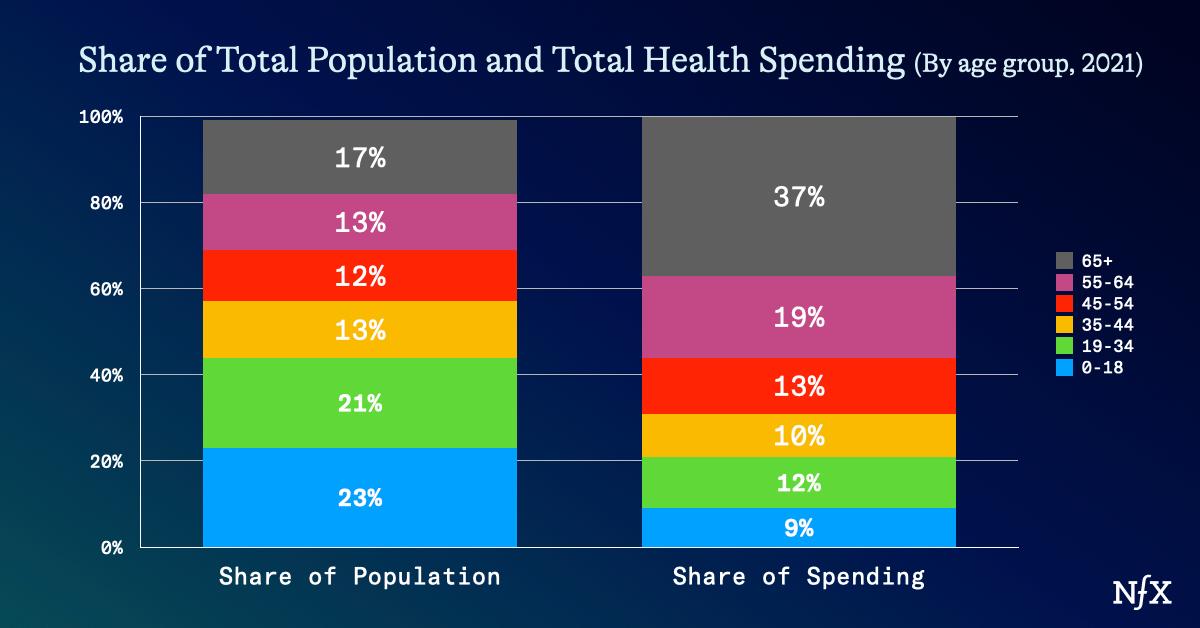
Older bodies cost more to maintain. Adults 65 and older are about 17% of the population but account for roughly 37% of healthcare spending — more than double their share. The pattern inverts at the other end: adults 19–34 are about 21% of the population and account for around 12% of spending, roughly half their share.
Keep people biologically younger for longer, and they spend less on healthcare.
Now, Social Security.
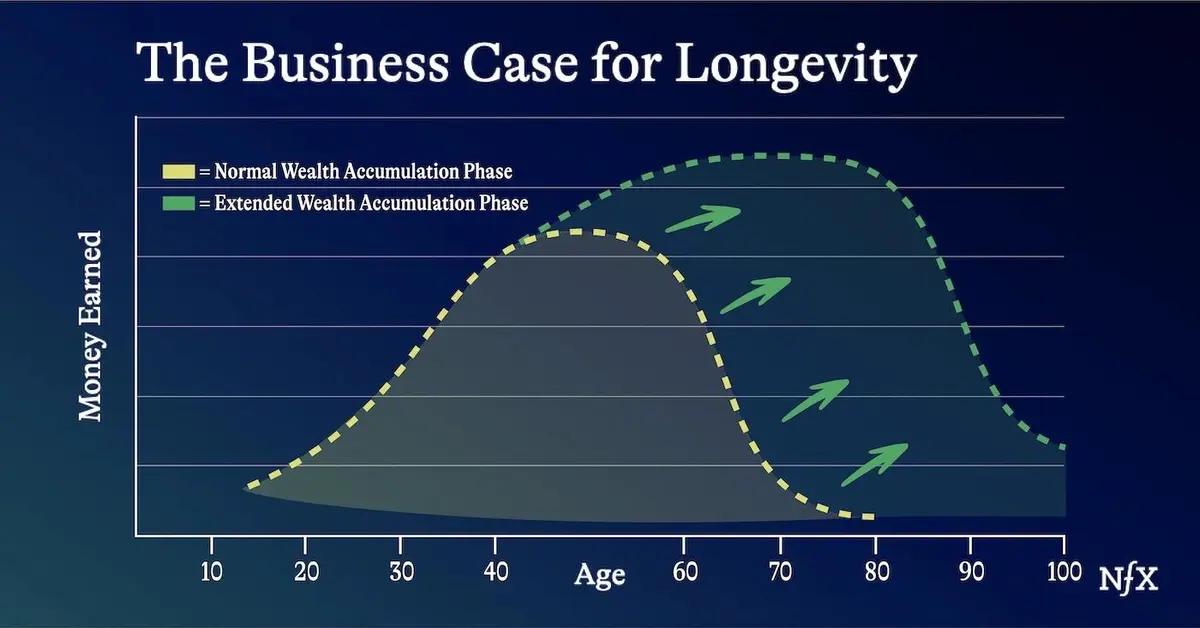
The current retirement system assumes people become unproductive in their 60s and require 15-20 years of financial support.
If 70-year-olds had the capabilities of today’s 30-year-olds, they could continue contributing to the economy, paying taxes, and building wealth instead of drawing down savings and social benefits.
Payments on the National Debt
Helping people live longer also has a capital formation effect.
Think of financial assets or investment vehicles as ways to shift consumption from one life stage to another. You invest money at 50 and plan to spend it, plus interest, at 75. You’ve transferred that consumption to 15 years in the future.
In the meantime, that money flows into the economy, reducing the cost of capital.
When you have millions more people with more wealth and more time to invest you get:
- Money flowing into bonds, stocks, and other investments
- Pension and retirement funds growing larger
- Institutional investors with more capital to deploy
- Banks with more deposits to lend
- Lower interest rates
How Longevity Generates Wealth
We are going to spend the money either way.
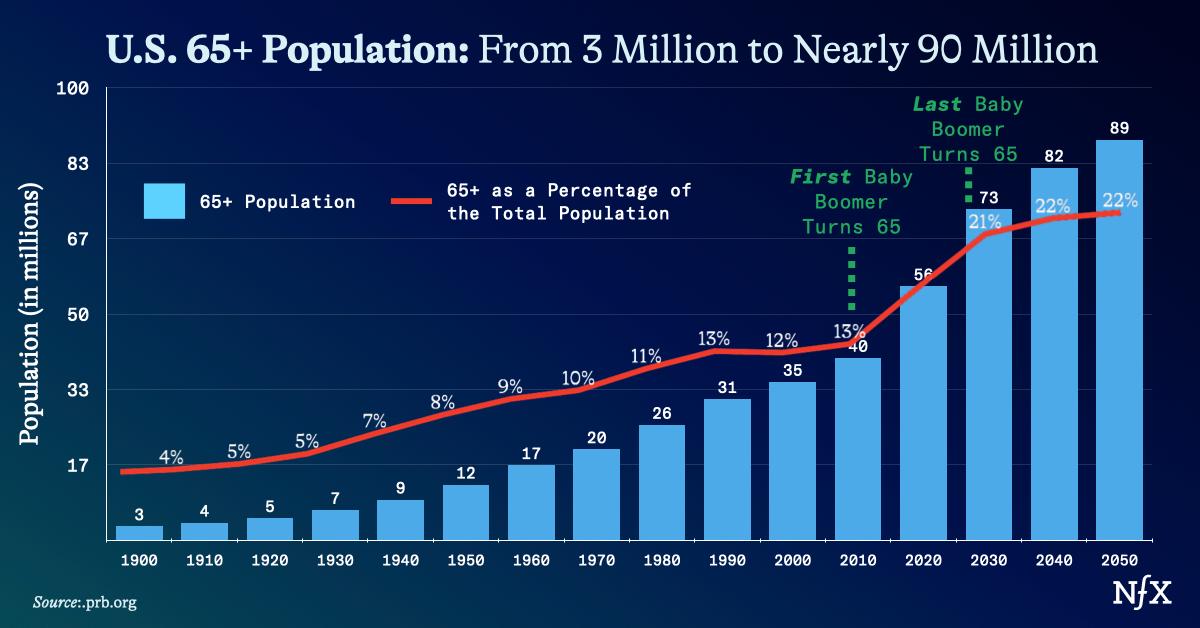
America is aging. By 2030, most baby boomers will be 65 or older.
And healthcare is on track to consume 20% of GDP by 2033.
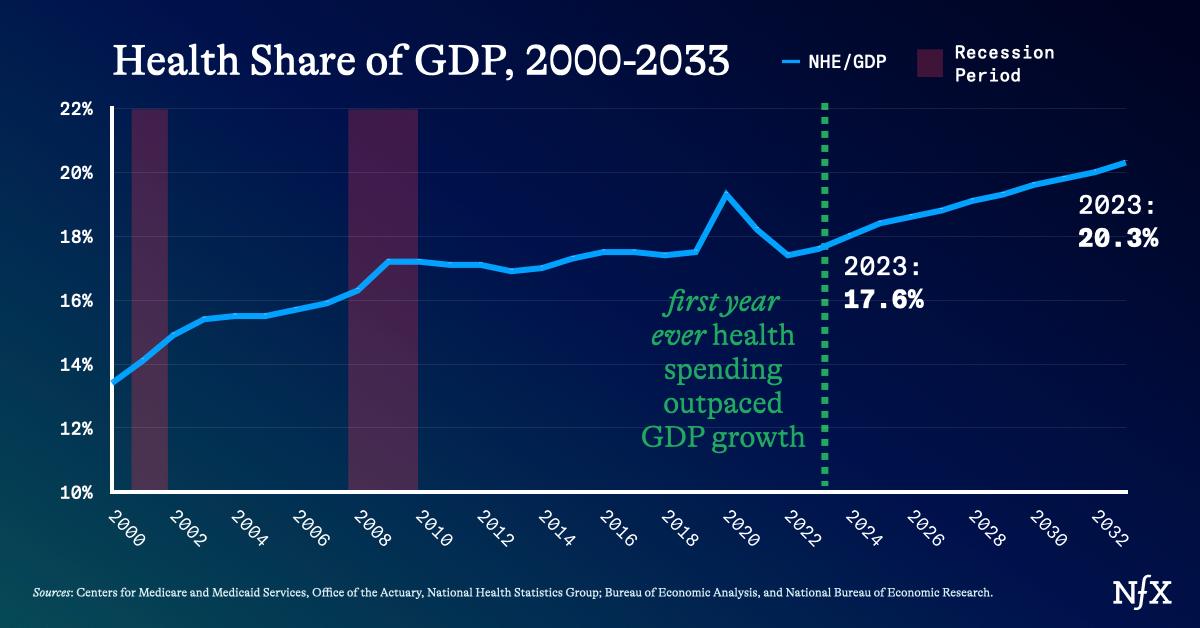
That spending is coming whether we like it or not. The only question is what we buy with it: death or life?
We can invest it in technologies that prevent disease, extend healthy years, and bend the cost curve down.
And the payoff of those investments is very real.
As we mentioned earlier, A peer-reviewed analysis in Nature Aging found that slowing aging enough to add one year of life expectancy is worth $38 trillion to the United States alone. Ten years of life expectancy is worth $367 trillion.
A separate study estimated that each additional year of life expectancy generates economic value equal to 4–5% of annual GDP – and that this benefit recurs every single year.
For scale: the total addressable market for longevity interventions could be as high as $1.2 quadrillion. Reasonable people debate that ceiling. But almost no one debates the floor — it is already measured in tens of trillions.
The technologies capable of capturing it are real, and they’re here now.
We outline them here:



As Founders ourselves, we respect your time. That’s why we built BriefLink, a new software tool that minimizes the upfront time of getting the VC meeting. Simply tell us about your company in 9 easy questions, and you’ll hear from us if it’s a fit.