TLDR:
- We are big believers in AI games and are investing. Come talk to us.
- We are all still waiting for AI games to really take off. There are technical and founder mindset barriers, but the opportunity is still sitting there.
- With AI, we should expand our concepts of what a game can be.
Why don’t we have a huge AI game yet?
There are some early hits, like Death by AI, or AI-NPC driven games on Steam but nothing truly huge. Latitude (AI Dungeon and successors) is probably the closest thing we’ve had to an AI‑native breakout so far – they saw the opportunity early.
Given the power of AI, it’s surprising we haven’t seen more massive games. There are a few factors that explain why:
Foundational Technologies Are Still Arriving
Let’s look at what happened with the internet technology window that opened in July 1993 and also didn’t produce games immediately.
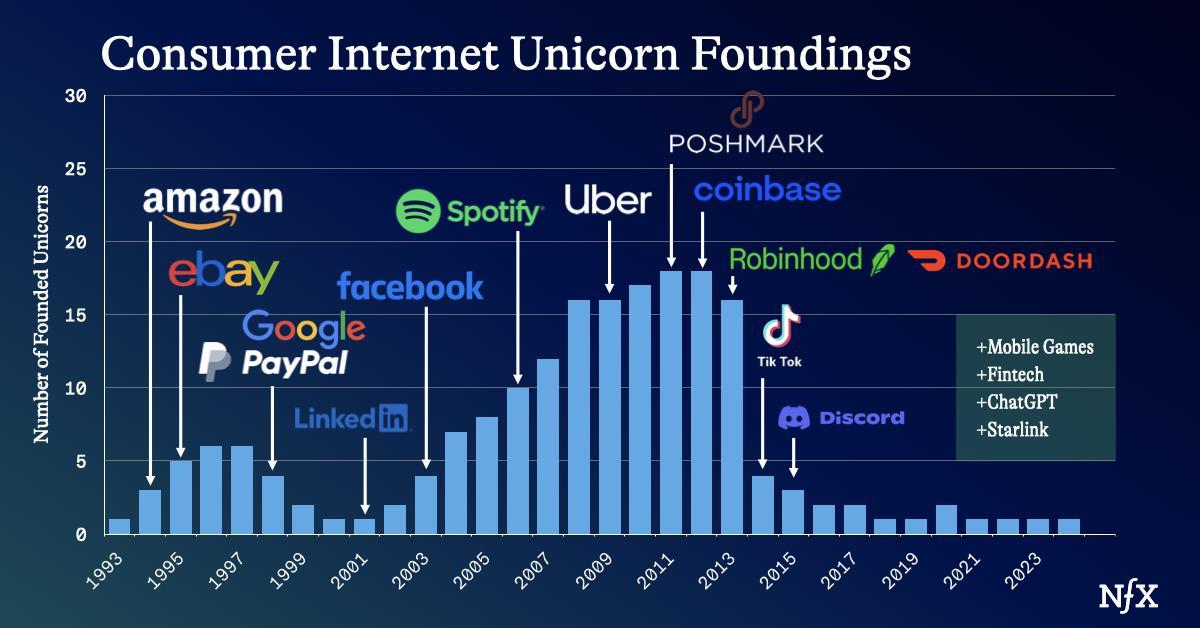
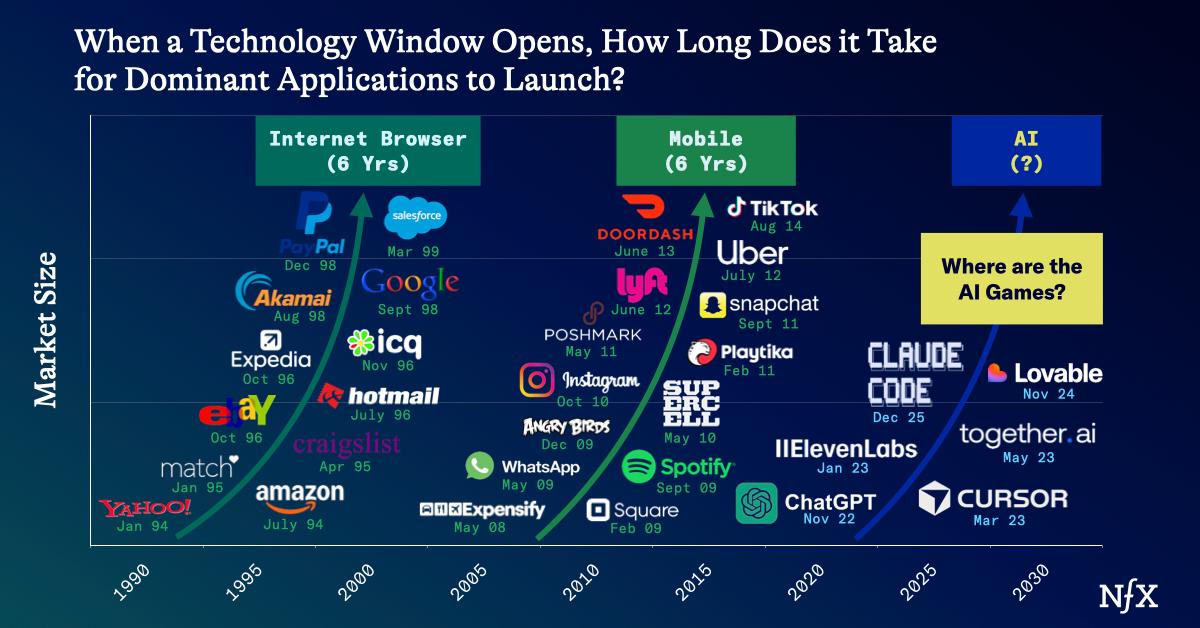
As shown above, many great consumer companies came out in the first 6 years. But no games. They didn’t arrive for 7.5 – 16 years after the first browser was available and modems were prevalent. Here are some of them that came within that window of time.
- Runescape, Jan 2001
- SecondLife, June 2003
- Steam, Sept 2003
- World of Warcraft, Nov 2004
- Roblox, Sept 2006
- Zynga, July 2007
- Minecraft, May 2009
- League of Legends, Oct 2009
The reason it took so long is that the browser alone wasn’t sufficient. These games were left waiting for bandwidth, video processing chips, memory and other underlying technologies. Further, developing the V1.0 of these games took 2-4 years in many cases.
As a prime example, in 1995, Philip Rosedale wanted to build SecondLife, but he calculated the bandwidth and processing speeds of PCs were NOT capable of supporting the vision. So instead, he built FreeVue, a video codec that was one of the foundational technologies that would be needed for SecondLife to work. He sold FreeVue in 1996 and it became the basis for Real Networks. He was CTO at Real until 1999 when he calculated that the other foundational technologies were getting close enough to support SecondLife. He founded a new company to build it, and launched the first working version in June 2003.
AI games are in a similar spot, waiting for foundational technologies to be in place.
The AI games teams have been waiting – and will continue to wait – for speed of inference, cost of inference, quality of models, memory management techniques, as well as the quality of images, video, voice, and music.
As you can see in the diagram above, the mobile technology window was different. Angry Birds, Supercell and Playtika all launched within 3 years of the mobile app store opening up. Why? Because the foundational technologies were all in place immediately on those magical mobile phones.
Technology Windows
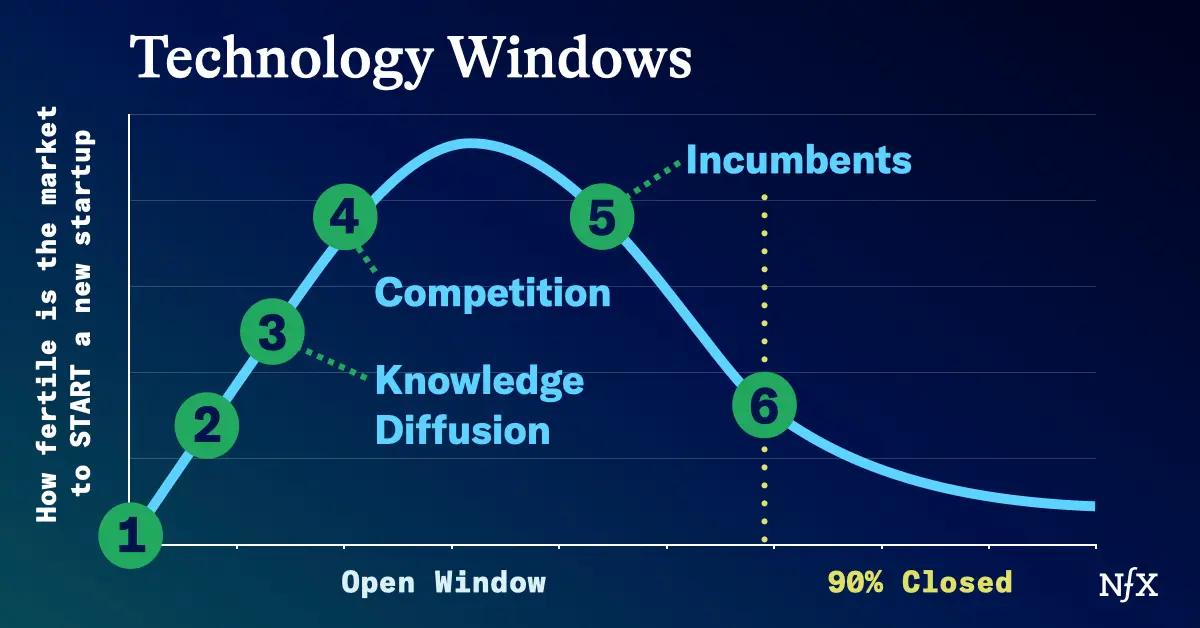
If you look at AI games through the technology window lens, we gain a clear picture of why we don’t have a major breakout now, and why we may have one soon. You need to look at when a technology window opens and when it closes. In this case, consumer software products are a good proxy.
Here’s an instructive consumer software example. On the back of the digital photography technology window opening in 2002, Friendster started its beta in Oct 2002, and then launched March 2003. LinkedIn launched May 2003. In July 2003 three more social networks launched in a 24-hour period including Tickle, Tribe and MySpace. In the next four months, eight more launched like Orkut, Hi5, Piczo and others, and then Facebook launched in Feb 2004, eleven months after Friendster.
Point is, the window to start a winning social network was approximately eleven months.
Once the mobile phone arrived, another technology window opened up. We got WhatsApp Feb 2009, Instagram Oct 2010, and Snap in July 2011. So that mobile consumer social network window was open for approximately thirty months. After that window closed, it didn’t matter how good other products were, or how talented the teams were, or how hard they worked. They couldn’t get any traction.
These windows are open for a short time and you have to hit the market before the window shuts.
Our sense is the window for AI-native-games has just cracked open in the last year.
Founder Mindsets
The second issue for why we don’t have truly massive AI games yet: we are simply waiting for the best founders to wrap their heads around what is possible with AI. Founders mental models are still adjusting. The language we use to conceptualize and talk to each other is still forming.
If founders can broaden their concept of what a game could be, they could be on the doorstep of a breakthrough today, even given the primitive level of the foundational tech.
What do we mean by broadening the concept of games? See the diagram below which shows other consumer experiences which are popular with AI so far.
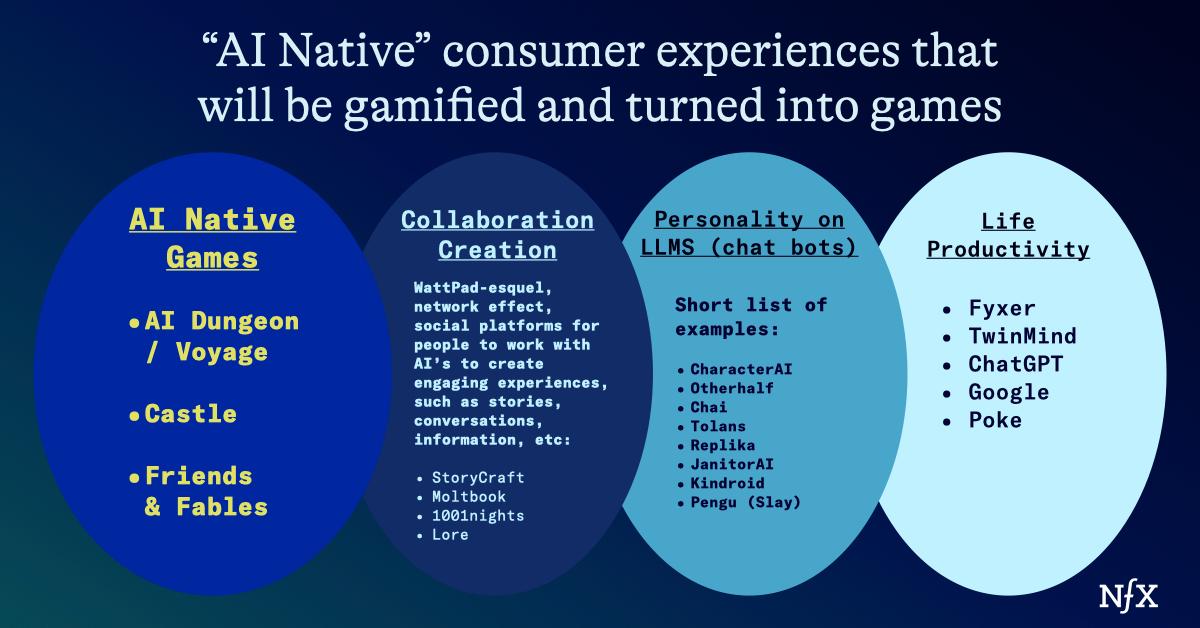
Today, in early 2026, it could be fertile to think about the products of Roblox, Minecraft and WattPad. Open up to ideas around AI twins, AI companions and the broad uses people are finding for ChatGPT.
Explore where AI voice is today already. Where image generation is. Video is almost there in small clips. What type of slow motion experiences captivate players, even when waiting for inference or image generation?
What sorts of experiences would allow today’s hallucinating LLM’s to be easily forgiven or better yet, a feature?
Why do we believe in AI games so much?
The games industry is bigger than the film and music industries combined. Games IS entertainment. We focus on the biggest piece, the game developers and publishers. Within that, we focus on mobile games which is the biggest piece, and then AI-first games.
Given AI is going to change everything about games over the next ten years we see a giant prize for founders.
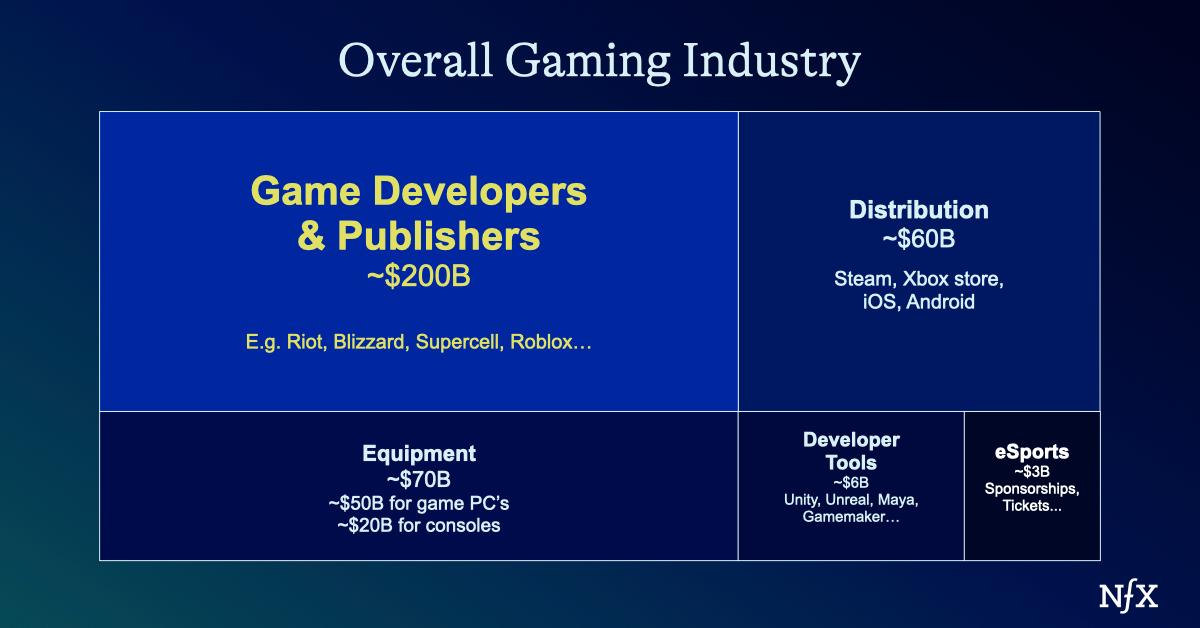
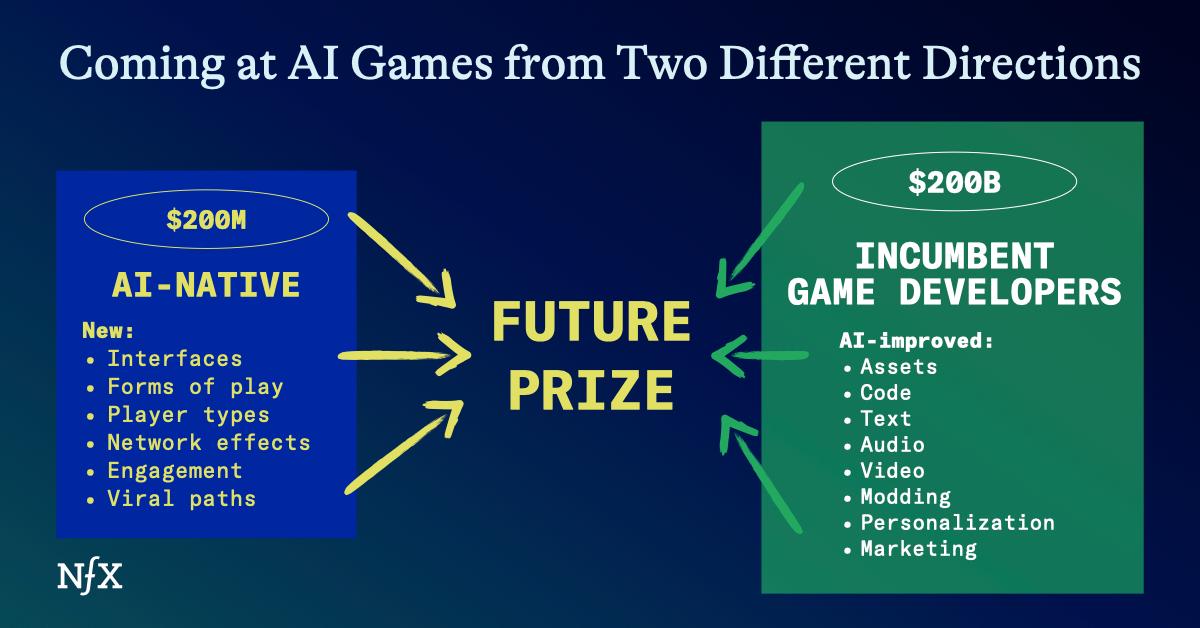
The incumbent game developers will, of course, come at this opportunity from where they sit. They will add AI incrementally to their existing successful business and lower costs, increase speed, and increase game depth. All valuable.
But we think the breakthroughs, the new Robloxs, new Riots, new Supercells, will come from AI Native thinking. Where founders start with AI and think about what engages people and what takes people on a ride.
New interfaces, new forms of play, new player types, new network effects, new engagement, and new viral paths. In fact, there will be new ways of operating game development studios.
We want to bet with founders on the left side of this diagram, going right:
Come discuss it with us. The window is wide open. There is so much to be invented in the next 36 months. These markets haven’t been this open for 10 years.
Come join us at the AI Games Summit March 8th by applying here.



As Founders ourselves, we respect your time. That’s why we built BriefLink, a new software tool that minimizes the upfront time of getting the VC meeting. Simply tell us about your company in 9 easy questions, and you’ll hear from us if it’s a fit.